


Quick Overview
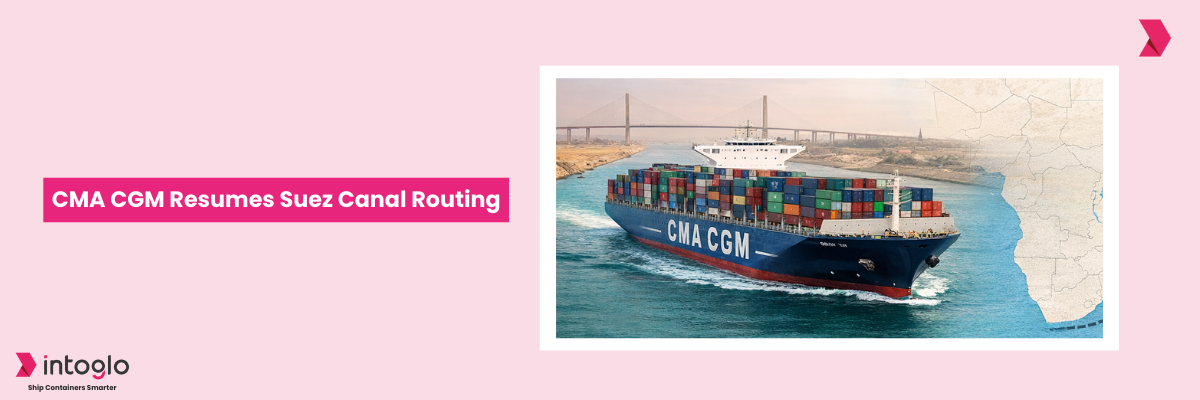
CMA CGM is bringing back Suez Canal transit for its INDAMEX service after Red Sea disruptions forced ships to take the longer Cape of Good Hope route. This article explains the phased return, its impact on India–US East Coast shipments, and how shippers can plan better.
Red Sea disruptions in late 2023 and 2024 forced India–US East Coast services to divert via the Cape of Good Hope, increasing transit times and disrupting schedules due to security risks and Houthi attacks in the region.
With INDAMEX services now resuming Suez Canal transit, shippers can expect transit times of approximately 21-24 days from India to the US East Coast, compared to approx. 30-35 days via the Cape of Good Hope route.
This will help US East Coast-bound shipments move faster with shorter overall transit times and more predictable delivery windows.
What is the INDAMEX Service?
The INDAMEX service is a container shipping route operated by CMA CGM that moves cargo between India and the U.S. East Coast.
It is used to transport large volumes of goods, including time-sensitive shipments. Because it connects major ports in both regions, any routing change can affect transit time and delivery schedules for shippers.
What Has Changed in the INDAMEX Routing?
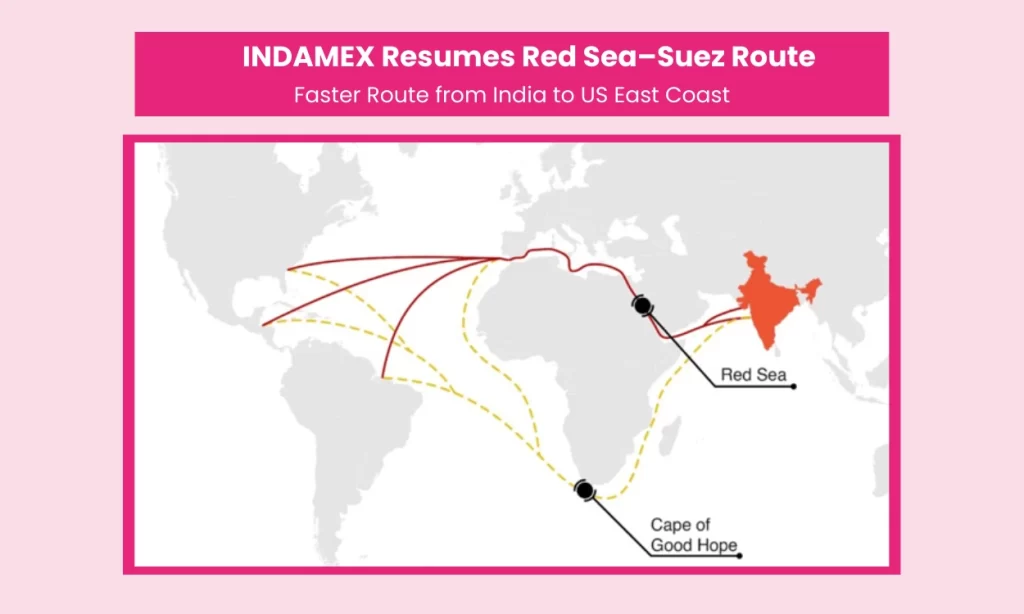
The Red Sea route was paused due to escalating security threats and Houthi attacks on commercial vessels, leading carriers to avoid Suez Canal transits and reroute via the Cape of Good Hope.
As risks are now being managed, INDAMEX has begun a phased return to the Suez route to restore faster and more predictable transit times.
- INDAMEX services have resumed Suez Canal transit via the Red Sea.
- The routing change has been applied first to the eastbound leg.
- The transition is set to begin with the first vessel, APL OREGON, operating on the revised route tentatively by the end of January.
- This is a planned operational shift, introduced in phases.
Implications of the Phased Suez Return for India–US Shippers
The phased return to Suez routing brings clear benefits, but it also requires shippers to reassess planning assumptions as services stabilize.
- Reduced transit times: Transit time to New York is expected to reduce to ~21–24 days, compared to ~30–35 days via the Cape of Good Hope route.
- Improved sailing frequency: More options for cargo planning and flexibility.
- Inventory planning: Adjust stock levels to match updated transit times.
- Delivery commitments: Align timelines with current routing for customer expectations.
- Planning considerations: Reassess assumptions post-January and track early sailings to ensure smooth operations.
- Phased return update: Eastbound services are already underway, with westbound sailings resuming gradually, helping maintain stable schedules and predictable operations.
What Shippers Should Do Next
As Suez Canal transits resume in phases, shippers should work with experienced freight forwarders like Intoglo to access updated sailing schedules, revised transit times, and vessel availability. This supports accurate planning and realistic delivery timelines as services stabilize.
Intoglo offers a single India-USA sailing schedule covering all major sailings, and updated shipping routes across multiple shipping lines – all at one place. You can download the schedule to plan sailings confidently every month without tracking multiple carrier websites or relying on follow-ups.
India–USA Sailing Schedule
All India to USA vessels with ports – updated every month.
Never miss another vessel. Plan your sailings without chasing multiple liner sites or endless follow-ups.
To explore how Intoglo can transform your India-US FCL shipping, connect with us :
📩 contact@intoglo.com | 📞 +91 84697 08714
Conclusion
The phased return to the Suez Canal improves shipping stability for India–US East Coast routes. Shippers should plan carefully, track early sailings, and adjust schedules as needed. For exporters seeking guidance on updated schedules and reliable execution, partners like Intoglo can help navigate the transition smoothly.
FAQs
Transit time via the Suez Canal is expected to reduce by 10–15 days, with New York shipments taking approximately 21–24 days compared to 30–35 days via the Cape route.
Freight rates may stabilize as transit times improve, but they will continue to depend on market demand, capacity availability, and fuel costs. Shippers should monitor carrier advisories rather than assume immediate rate reductions.
Yes. Although services are resuming, the Red Sea remains a closely monitored region. This is why carriers are using a phased approach and maintaining flexibility in routing decisions.
Yes, typically communication becomes clearer as routings settle. However, I recommend continuing to rely on multiple data points, carrier updates, vessel tracking, and forwarder inputs rather than a single source.
Monitoring carrier schedules, vessel movements, and real-time sailing updates is critical in the early weeks. Working closely with logistics partners can help identify potential delays before they impact inventory or deliveries.

Leave a comment